
Grow a Mathematical Brain
“Ruth's energy and passion of teaching math is contagious. With solid solutions on how to teach and approach math I found her ideas very applicable and accessible.” - Tamara
Young children are naturally curious about maths.
Until adults tell them otherwise.
You have a young child, probably 10 or under.
You are desperate to nurture their natural curiosity and love of maths.
Not replicate the drill and worksheets you have seen in school.
So your child can thrive in the future and have the opportunity to take maths to the levels they want and need.
Young children are naturally curious about maths.
Until adults tell them otherwise.
You have a young child, probably 10 or under.
You are desperate to nurture their natural curiosity and love of maths.
Not replicate the drill and worksheets you have seen in school.
So your child can thrive in the future and have the opportunity to take maths to the levels they want and need.
Imagine this: Your child is developing epic maths skills but it looks and feels like play. They are enjoying it, you feel relaxed and confident.
This is because you know:
- What is key to developing mathematical thinking for long term confidence in maths.
- You have a range of resources to hand that are easy to use.
- How to confidently talk about mathematics with your child and understand how this develops their number sense and ability to make mistakes.
- Language for why more formal ways of learning maths don't work for the majority of children and you can articulate this clearly to others.
- How to dive into problem solving with your child and how this will develop into more formal skills when they are ready.
I taught maths in secondary schools for over 11 years, and time and time again I saw children arriving with their confidence, curiosity and passion for maths in tatters.
There is such a huge focus on formal methods in primary schools it seem that everyone has forgot what is actually important - the deep understanding for life long learning.
Not to mention...dare I say, enjoying maths.
Yet non of the research backs this way of learning maths up. In fact, it points directly at maths anxiety. So I am here to set you in the right direction.
I taught maths in secondary schools for over 11 years, and time and time again I saw children arriving with their confidence, curiosity and passion for maths in tatters.
There is such a huge focus on formal methods in primary schools it seem that everyone has forgot what is actually important - the deep understanding for life long learning.
Not to mention...dare I say, enjoying maths.
Yet non of the research backs this way of learning maths up. In fact, it points directly at maths anxiety. So I am here to set you in the right direction.
This is a course for home educating parents of young children that are not ready for formal written maths yet.
It is likely your child is 10 or under (although every child absolutely develops at the perfect rate for them so this age is not fixed).
You know you want to offer mathematics and numeracy but you don't know how to do it without workbooks, curriculums or online programmes.
You want your child to develop mathematical thinking skills that will serve them well when they are ready for more formal maths.
You want your child to have real life and hands on experiences that they will be able to draw on when they learn abstract concepts.

“Ruth has guided me in engaging my child, who has a real aversion to anything maths related, in a practical, fun manner. She gives so much guidance, advice encouragement and wisdom, all underpinned with a strong evidence base to offer reassurance. I now feel I have a tool box bursting with ideas and a community to support me.” - Kelly

“Ruth has guided me in engaging my child, who has a real aversion to anything maths related, in a practical, fun manner. She gives so much guidance, advice encouragement and wisdom, all underpinned with a strong evidence base to offer reassurance. I now feel I have a tool box bursting with ideas and a community to support me.” - Kelly
How can you learn maths without worksheets?
Mathematics is not a written subject.
Maths is in your head, where you do your thinking.
Absolutely, it is essential to have physical objects, pictures and even notes to support understanding.
But you don't developing thinking skills by writing, you develop them by thinking, playing, exploring and asking questions.
This course last 4 weeks and over that time you will get:
A set of short weekly videos taking you through the key topic including a printable workbook for your notes and thoughts.
A weekly live call to discuss the theme for that week, ask questions and for raw and honest reflections. (These are highly impactful so I do recommend coming live, but recordings are provided too)
A community space that I will be in daily, answering your questions and giving support.
Links to amazing resources to use at home.

Ways to trick or coerce your child into learning maths.
A guide to what your child should be doing by a certain age or stage.
Ways to disguise learning maths as a game.
A step by step guide to getting your child to learn specific mathematical topics or methods.
Know how to explore mathematics using physical games and resources with your child and have resources to do this.
Have strategies, games and ideas for developing number sense and slotting it easily into your life.
Understand how games and puzzles develop deep mathematical thinking skills and have links and downloadable ideas to implement immediately.
Feel confident in supporting your child in asking big questions, exploring asnwers and making mistakes - the key to genuinely understanding.
What you really need is the opportunity to see maths done differently.
You need to understand what the research says about learning maths effectively for the long term.
You need to hear from a person who has lived and breathed the school system for over 30 years and been traditionally successful in maths, telling you that traditional methods do not align with positive outcomes for most people.
You need to know that your child can thrive and be successful, in every meaning of the word, without being coerced into memorising meaningless facts or practice.
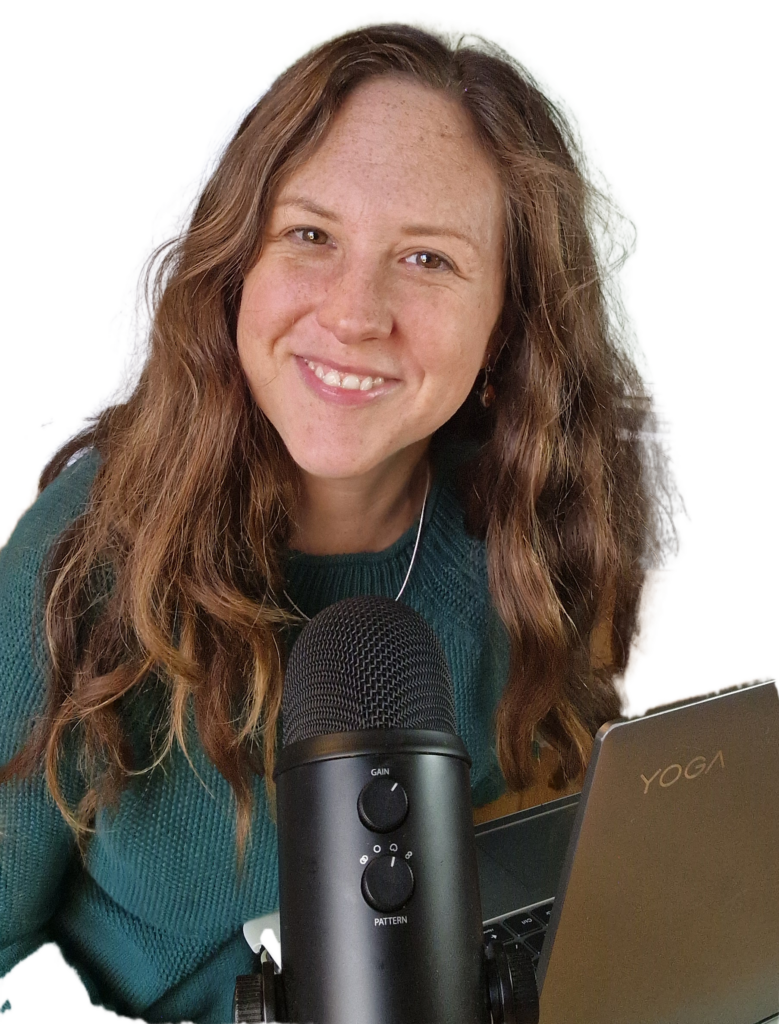
You need me.
Hi there, I am Ruth - lover of maths, celebrator of children, living for joy and connection.
I was traditionally successful at school. I did all the “right things” like getting good grades, all the extra-curricular stuff, good degree at a good university, straight into work, up the ladder until...
BOOM – I had children.
They did not fit this perfect mould, and by heck – they were loud about it! Now I thank them every single day for showing me that I do not either.
And the chances are -neither do you and your child.
Because if 11 years of teaching in a classroom showed me one thing, it showed me how few people really do fit this mould.
Afters years of painfully and unsuccessfully fighting to change the system from the inside, I took my research and passion for learning and left "traditional" education.
And now I am here, with all my knowledge and passion as well as 5 years of de-schooling and coaching families under my belt, ready to lead a maths revolution.

"Ruth has given me permission to reject mine and others preconceived ideas and equipped me with practical confidence to teach maths. Ruth's courses are amazing. I feel so much more confident and have more resources I know about and I am so here for her philosophy.” - Victoria
"Ruth has given me permission to reject mine and others preconceived ideas and equipped me with practical confidence to teach maths. Ruth's courses are amazing. I feel so much more confident and have more resources I know about and I am so here for her philosophy.” - Victoria
Grow a Mathematical Brain is all about playfulness.
This is for you if:
You prioritise evidence based learning, trust in your children and connection.
You want to approach learning and understanding mathematics in a flexible way that meets your child’s needs.
You are willing to dive into maths along side your child.
You are willing to have an open mind about how learning maths richly and deeply looks.
You want to offer epic maths skills and a rich education to your child alongside autonomy and choice.
What content is covered?
Each week there will be bite sized videos that are perfect to watch around busy parent life. Each set will explore a different theme, guide you through activities to do at home and encourage you to reflect so that you are able to guide your child perfectly. There will also be a workbook to use and to come back to later on.
Live calls run at 8pm UK time on Wed 3rd June, Wed 10th June, Wed 24th June and Wed 1st July.
Week 1: Shape, space and exploring the world
Real life experiences set you up for understanding abstract mathematical concepts. Let’s explore ideas for how to give these real life experiences and how to talk about them with your child.
Week 2: Number Sense
Like reading is the foundation of literacy, number sense is the foundation of mathematics. Let’s explore exactly what number sense is (schools get this wrong), some activities that are easy to use at home and how to talk to our kids to help them really get it.
Week 3: Games and Puzzles
Mathematical thinking often takes a back seat to learning formal methods. Not only is this a huuuge mistake, it is significantly less fun and interesting!
Week 4: Creativity and Mistake Making
Making mistakes and going wrong is wrong is vital for learning maths. But maths anxiety often comes from a deep belief that making mistakes is bad. Let’s explore how we can encourage creativity and mistake making in maths.
BONUS: REBOOT
My 6 step process for moving away from a fixed school mindset into a mindset that will best support your child when learning maths.
BONUS: BLAZE
My most popular workshop all about using physical and visual resources to make learning maths make sense.
Next Cohort - Nov 2026
Live calls run at 8pm UK time on Wed 3rd June, Wed 10th June, Wed 24th June and Wed 1st July.
Early bird offer £97 (Ends 18th May)
All included for £147
FAQ's
How long will I have access to the course?
You have life time access once you purchase.
What if I can't make the live calls?
I would highly recommend the live calls for maximum impact, but they are also recorded and added to the course area.
For questions you will be able to comment under the modules and/or use the telegram group.
What age children is this aimed at?
Mostly likely your child will be 4-10 years old but I firmly believe that every child develops at the perfect pace for them. Your child will not be ready for formal written methods yet and will want to explore maths skills through play and games.